
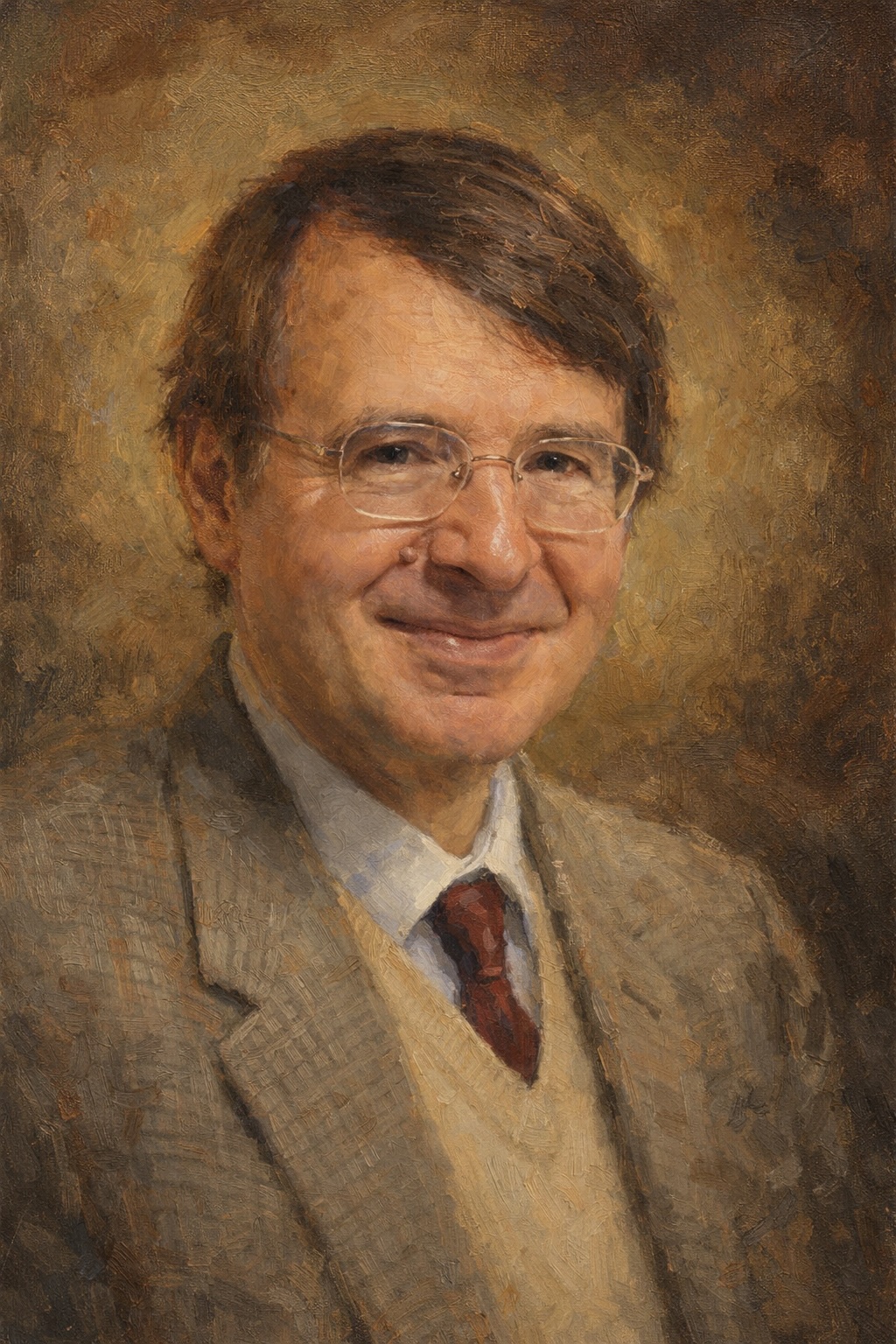
An academic career across institutions and disciplines
Scientific training in natural sciences, neurophysiology, and computer science, followed by research and leadership spanning fundamental neuroscience and its computational applications.
Alessandro E. P. Villa
Professor of Neuroeconomics and Computer Science at HEC Lausanne and Professor of Neuroscience at Université Grenoble Alpes. His work bridges experimental neurophysiology, computational neuroscience, cognitive dynamics, neural engineering, and neuroeconomics.
An elected full member of the Swiss Academy of Engineering Sciences (SATW), Villa served as President of the European Neural Network Society (ENNS) over two terms, and as Associate Dean for the Doctoral School at HEC Lausanne.
Publication of a major contemporary statement on neuroheuristics in Cognitive Neurodynamics.
Elected full member, Swiss Academy of Engineering Sciences (SATW).
Elected President, European Neural Network Society (second term).
Elected President, European Neural Network Society (first term).
Professor of Neuroeconomics and Computer Science, Faculty of Business and Economics (HEC), University of Lausanne.
Professor of Neuroscience, Faculté de Médecine, Université Grenoble Alpes.
Establishment of the Neuroheuristic Research Group at the University of Lausanne.
Postdoctoral and advanced research training in Jerusalem, Los Angeles, Italy, and Marseille.
PhD in Neurophysiology, University of Lausanne (1988); MSc in Computer Science, EPFL (1989).
Scientific networks
Selected collaborators and scientific links in neural coding, computational neuroscience, systems physiology, and interdisciplinary research.
Experimental neuroscience
Work across auditory systems, spatiotemporal neural coding, neuromodulation, and clinical neurophysiology.
Computational science
Longstanding collaborations on recurrent networks, neural dynamics, attractors, and spike-train methods.
Interdisciplinary initiatives
Conference leadership, editorial contributions, and collaborations across European and international institutions.
For historical collaborators, personnel, and alumni, see the NHRG historical archive. Historic descriptions of roles and affiliations should not be treated as currently active.