
From risky choices to computational phenotypes
How consistently do people express preferences under uncertainty, and how do these patterns relate to individual differences in neural processing? The group integrates experimental choice paradigms, psychometric modeling, multivariate statistical analysis and electrophysiology.
Experimental design and quantitative analysis
Behavioral measurement
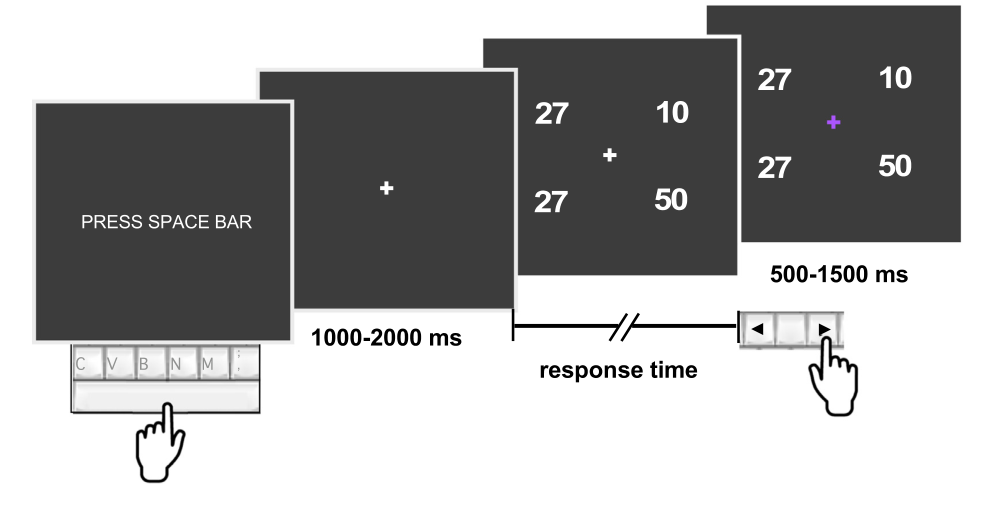
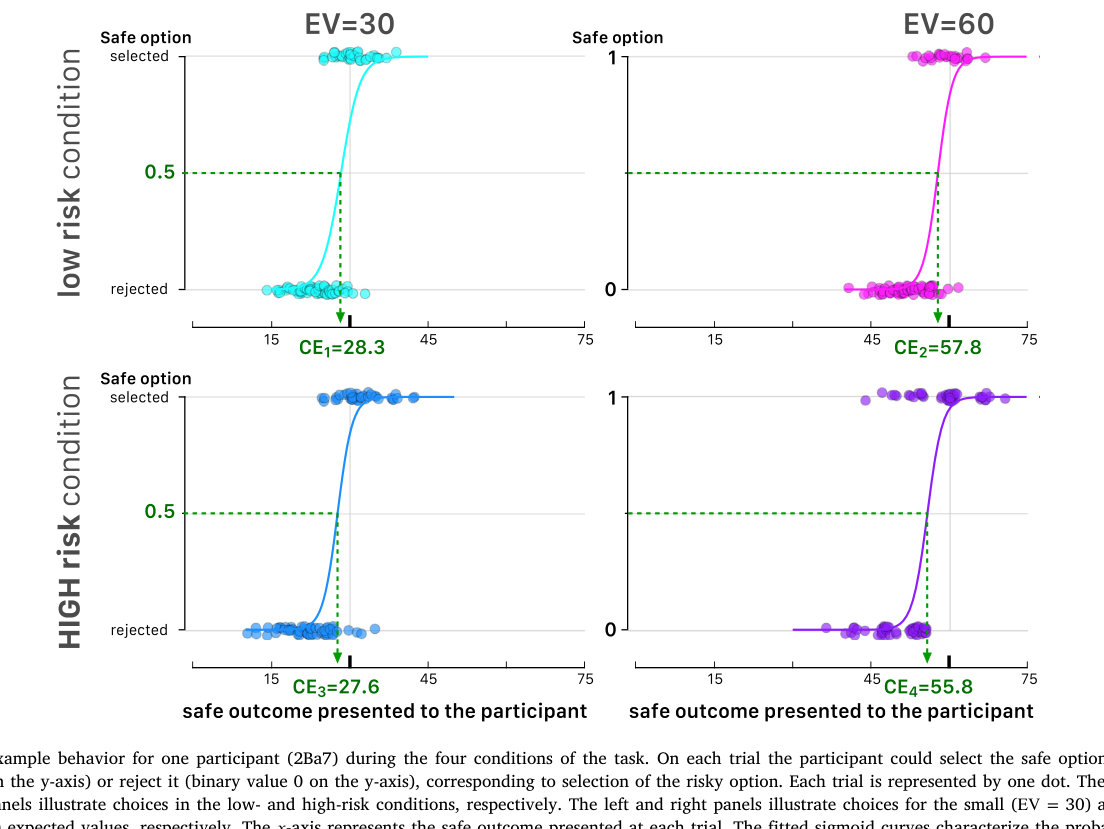
Repeated binary choices between a safe value and two equiprobable gain outcomes, with expected value and outcome variance manipulated independently.
Computational descriptors
Certainty-equivalent contrasts, differences across decision contexts, psychometric slopes and lapse estimates characterize each participant.
Model-based profiles
Gaussian finite-mixture analyses with controlled covariance structure, posterior membership probabilities and subsampling-based stability checks.
Neural correlates
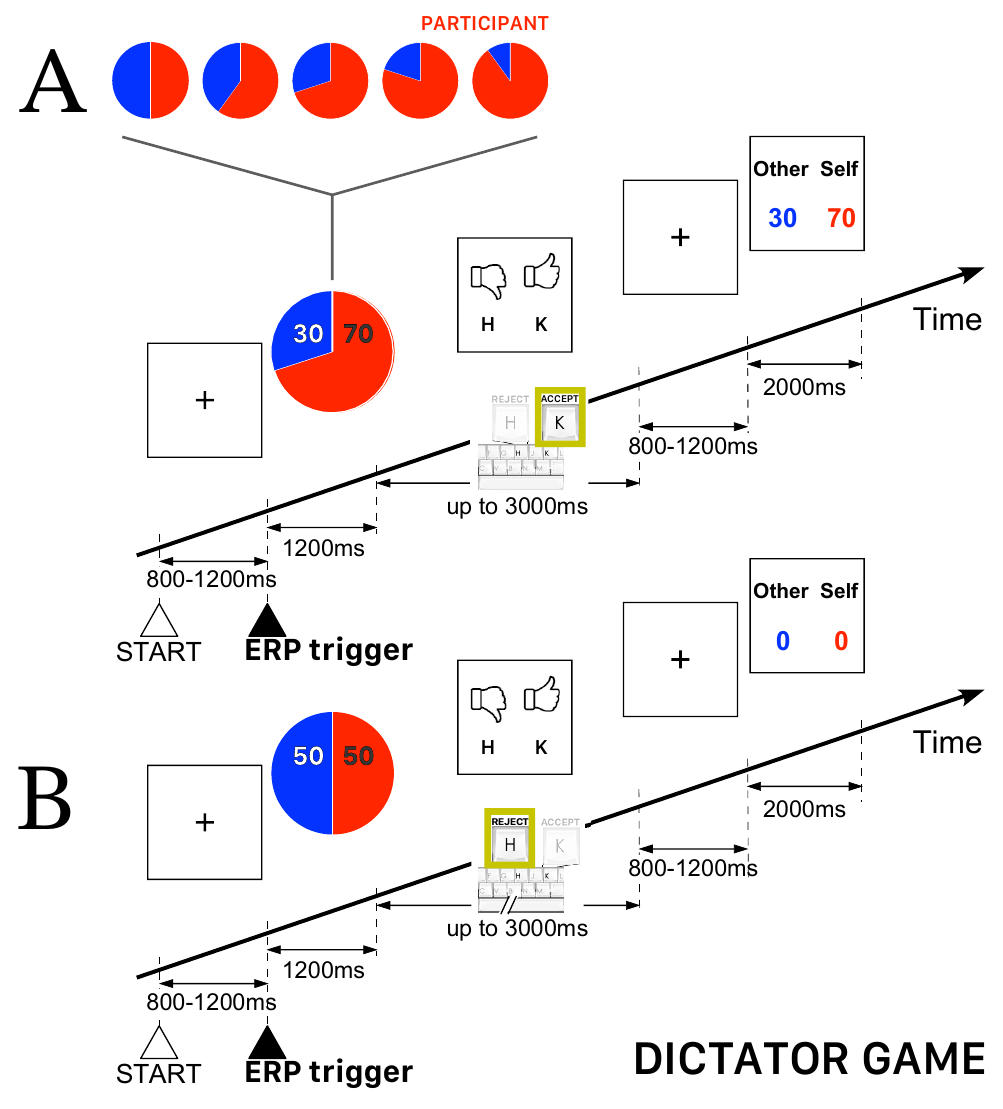
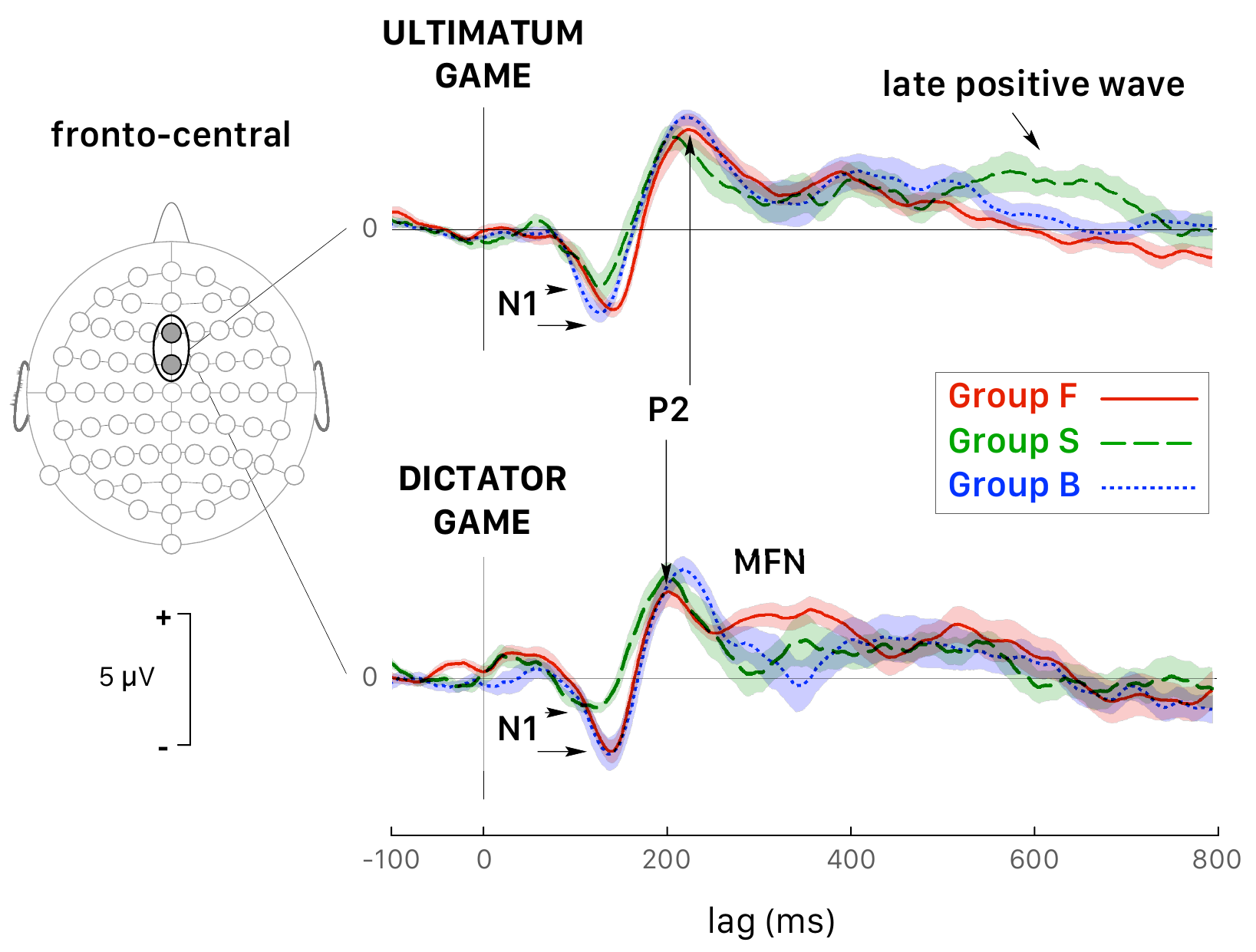
Earlier EEG studies examine how fairness-related decisions in Dictator and Ultimatum Games are accompanied by event-related brain responses.
Published figures: choices, fitted curves and group structure
What the evidence supports
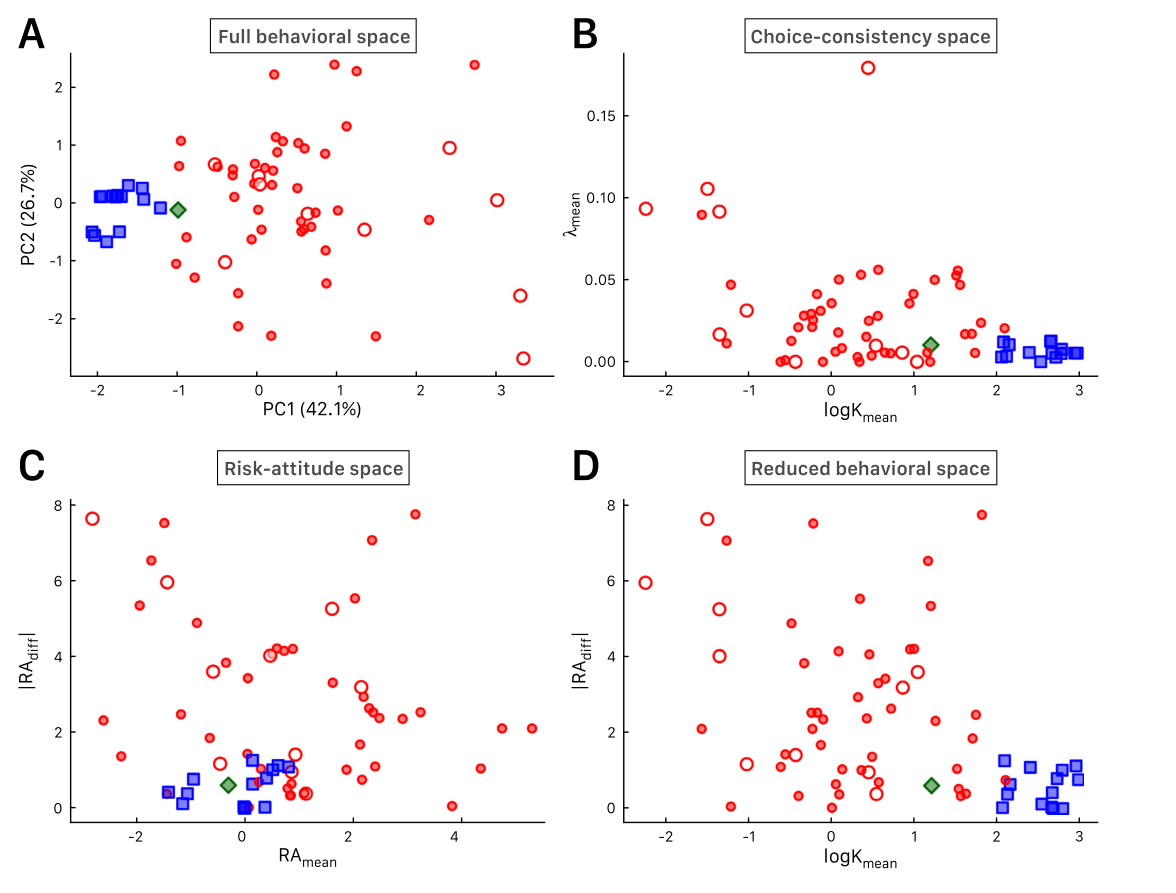
The 2026 study found a two-profile behavioral representation that remained stable across several preprocessing and resampling checks. One profile showed greater risk aversion and less consistent expression of preferences, while the other was closer to risk neutrality with more consistent choices. These are statistical descriptions of this sample.
The 2022 study provides complementary electrophysiological findings from fairness-related decisions. Connecting behavioral profiles with temporally resolved neural signals remains an active research direction.
Selected publications
Lintas, A., & Villa, A. E. P. (2026). Risk attitude and choice consistency identify robust behavioral profiles in decision-making under risk. BioSystems 268, 105927.
doi:10.1016/j.biosystems.2026.105927 ↗Miraghaie, A. M., et al. (2022). Electrophysiological Markers of Fairness and Selfishness Revealed by a Combination of Dictator and Ultimatum Games. Frontiers in Systems Neuroscience 16, 765720.
doi:10.3389/fnsys.2022.765720 ↗Original published figures are reproduced with acknowledgement and links to their source articles. NHRG-supplied and openly licensed images are stored locally in this website.