
Vascular health and cognition in peripheral arterial disease
The NHRG–CHUV collaboration studies associations among peripheral arterial disease (PAD), cerebral physiology, working memory and physical function. The research combines clinical exercise approaches, adaptive cognitive tasks and multimodal brain measurements.
Quantifying neurovascular coupling
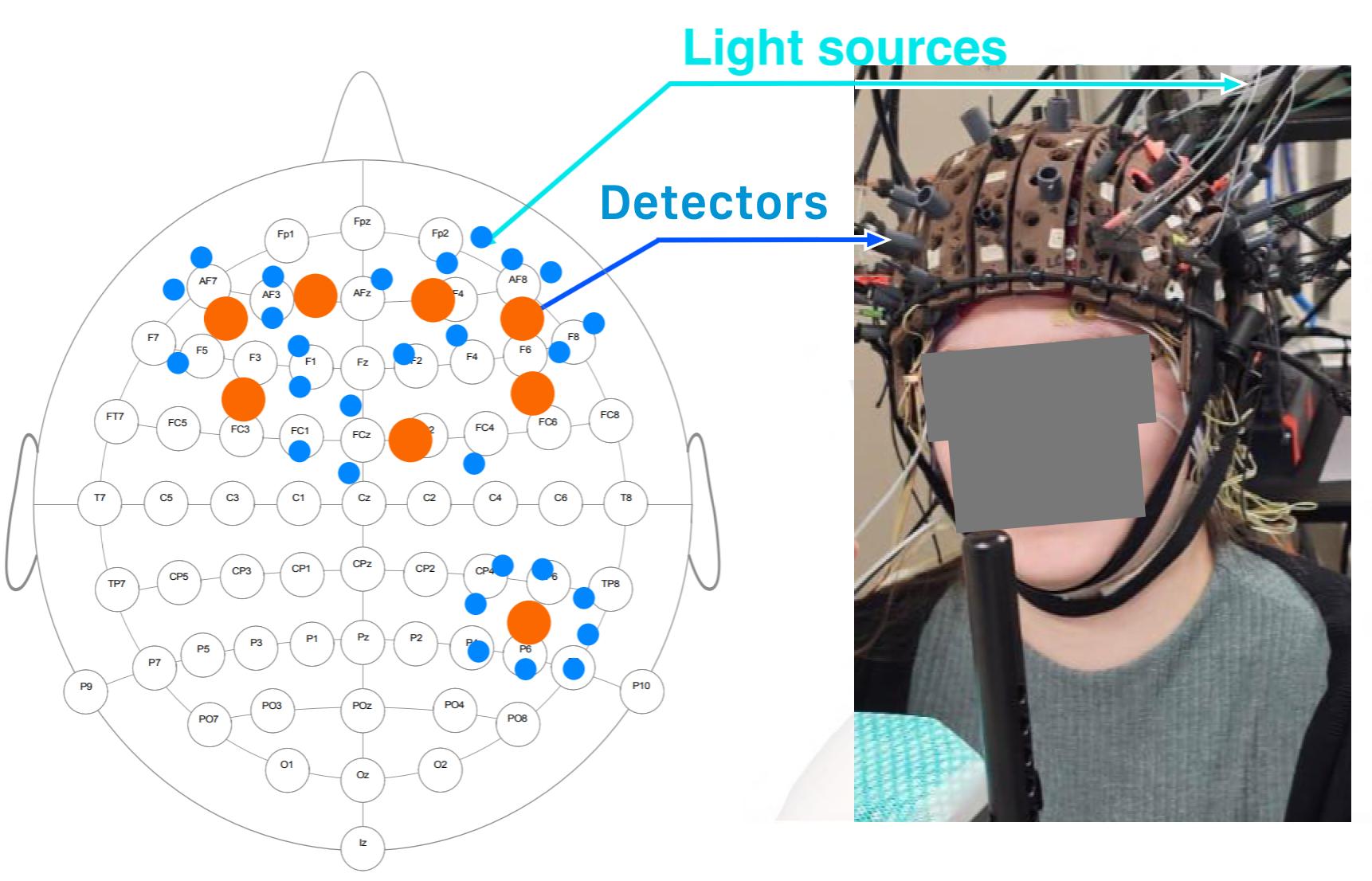
Simultaneous EEG and FONI
Electrophysiological signals alongside frequency-domain functional near-infrared optical measurements are used to examine neural and hemodynamic dynamics.
Nonlinear dynamics
Cross-bicoherence and higher-order spectral analysis are proposed to quantify interactions across neural and vascular signals.
Data integration
Machine-learning methods are planned to integrate neuroimaging, cognitive and exercise-performance measures.
Adaptive training
Dual N-Back working-memory training forms the cognitive component of the proposed intervention.
The original multimodal recording and exercise protocol figures
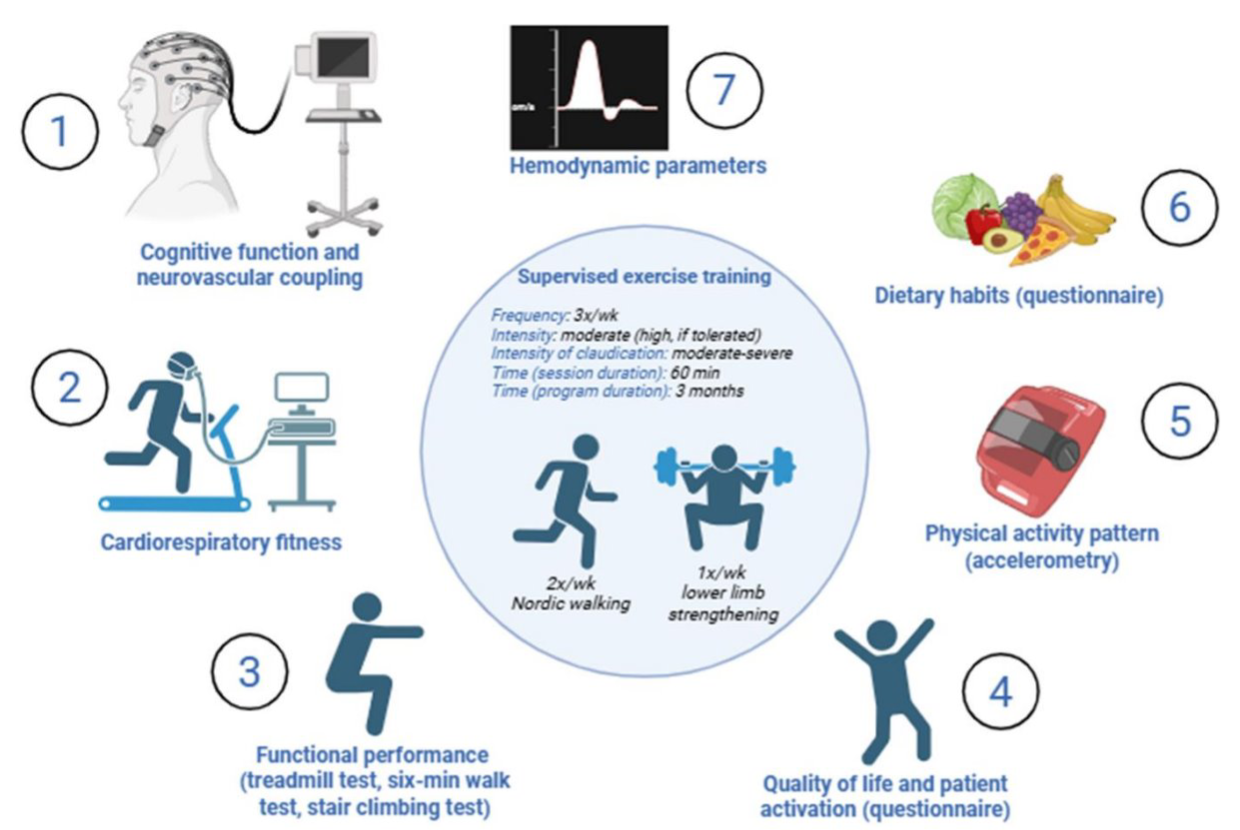
12-week dual-intervention protocol
The published protocol proposes 12 weeks of supervised exercise and working-memory training, with neurophysiological and cognitive assessments before and after intervention. Exercise combines Nordic walking with lower-limb strengthening, while cognitive training uses an adaptive Dual N-Back task.
CHUV, Lausanne University Hospital: Lucia Mazzolai and Stefano Lanzi. NHRG: Alessandra Lintas, Clotilde Boffy and Camille Leroy.
2026 support: Emma Muschamp Foundation, awarded to Dr. Stefano Lanzi, PI.
Interpretation should remain protocol-based until the resulting clinical analyses have been completed and peer-reviewed.
Selected publications
Boffy, C., Leroy, C., Lanzi, S., Mazzolai, L., & Lintas, A. (2025). Neurovascular Mechanisms in Peripheral Arterial Disease: Impact of Physical Exercise and Cognitive Training. Brainiacs 6(1), Edoc YD2D1576B.
doi:10.48085/YD2D1576B ↗Abe, T., Asai, Y., Lintas, A., & Villa, A. E. P. (2024). Detection of quadratic phase coupling by cross-bicoherence and spectral Granger causality in bifrequencies interactions. Scientific Reports 14, 8521.
doi:10.1038/s41598-024-59004-8 ↗Original published figures are reproduced with acknowledgement and links to their source articles. NHRG-supplied and openly licensed images are stored locally in this website.