01 / RESEARCH
Computational neuroscience
Quantitative frameworks for systems neurophysiology, nonlinear neural interactions, information processing and complex brain dynamics.
 UNIL · Université de Lausanne
We study how brain dynamics give rise to cognition, attention and decisions — bridging computational methods, electrophysiology, optical brain imaging and behavioral experiments.
Scientific leadership · Dr. Alessandra Lintas · Principal Investigator & Research Manager, LABEX, Faculty of Business and Economics
Explore our science ↗Meet the team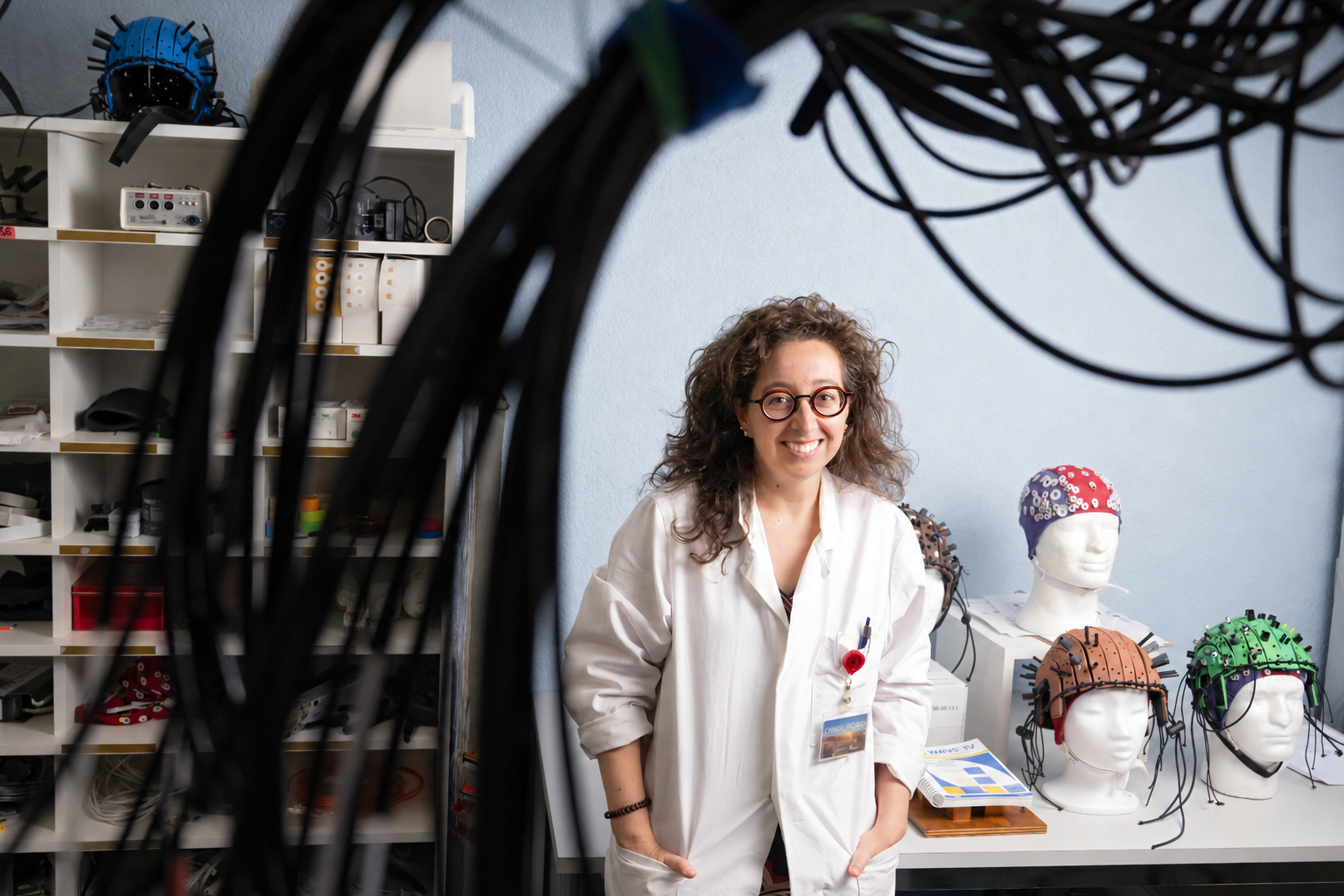
Scientific research programs
Dedicated scientific pages with computational methods, experimental context, representative publications and clearly attributed illustrations.
Our research connects computational and systems neuroscience with experiments in decision-making, attention and multimodal brain imaging. Signal-processing methods—including higher-order spectral analysis, cross-bicoherence and spectral Granger causality—help us characterize nonlinear interactions in complex neural recordings.
Quantitative frameworks for systems neurophysiology, nonlinear neural interactions, information processing and complex brain dynamics.
Higher-order spectral methods, cross-bicoherence, spectral Granger causality and exploratory fuzzy clustering of EEG event-related potentials and other neural recordings.
Behavioral and electrophysiological analysis of risk, fairness, individual differences, emotional influences and social decisions in Ultimatum and Dictator Games.
Visual attentional capture and suppression, novelty detection, attentional networks, EEG/ERP measures and neural mechanisms of cognitive control.
Behavioral and electrophysiological approaches to adult ADHD, including adaptive dual n-back training, attentional plasticity and cognitive performance.
Multimodal EEG and frequency-domain fNIRS/EROS of brain responses, neurovascular coupling and cognitive health, including exercise studies in peripheral arterial disease.
The NeuroHeuristic Research Group conducts computational and experimental neuroscience research within the University of Lausanne research environment. Dr. Alessandra Lintas serves as Principal Investigator and Research Manager at LABEX, Faculty of Business and Economics.
The group retains its original NHRG name and visual identity alongside its University of Lausanne affiliation.
Dr. Lintas’s research spans experimental neuropharmacology, computational signal analysis, human decision neuroscience and multimodal neuroimaging. These complementary approaches provide a cross-scale perspective on cognition.
Experimental investigations of dopamine-receptor pathways, opiate reward memory, basal ganglia and thalamic circuits, and parvalbumin-related neuronal physiology.
Analysis of quadratic phase coupling and bifrequency interactions with cross-bicoherence and spectral Granger causality; fuzzy clustering for exploratory analysis of event-related potentials.
ERP markers of fairness and selfishness in Dictator and Ultimatum Games; individual differences in decision strategies; ADHD and working-memory training.
Combining event-related electrical responses with frequency-domain fNIRS and fast optical signals (EROS) to study prefrontal processing, auditory deviance and neurovascular dynamics.
Clinical collaborations spanning adult ADHD, cerebral and cognitive responses to physical exercise in peripheral arterial disease, and sleep-related brain physiology.
Contributions to ICANN, Neural Coding and the European Neural Network Society through scientific organization, proceedings and community service.
Based on Dr. Lintas’s 2025 and 2026 scientific-achievements statements; descriptions are synthesized for web presentation, not verbatim quotations.
Ongoing lines of inquiry and completed funded work, distinguished below. Some ongoing programs build on earlier SNSF grants whose original funding periods have ended.
Computational models of decision behavior, risk sensitivity, social choice and coupled neural dynamics. This is an ongoing research program; linked earlier SNSF awards are completed.
Attraction and suppression of attention: combining EEG/ERPs, visual attention experiments and optical approaches to characterize attentional capture. SNSF 2025–2029.
Clinical study of cerebral and cognitive responses to physical exercise in symptomatic peripheral arterial disease (PAD), supported by the Emma Muschamp Foundation in 2026.
NeurEcA: a neuroeconomic investigation of working-memory training, decision-making and brain plasticity in ADHD and control participants. SNSF grant 138032 (2012–2015).
Nonlinear brain-signal analysis using bispectral methods, cross-bicoherence, Granger causality and computational clustering of event-related potentials.
Fast optical imaging during the Ultimatum Game (SNSF 183401, 2019) and studies linking sleep patterns with risk preferences (SNSF 178329, 2018–2021).
Meet the NHRG research team and its international network of scientific collaborators.
Scientific leadership, researchers and students.
Researchers and partners across neuroscience, computation and clinical research.
A curated selection of NHRG publications appears here. The searchable Publications Explorer offers more records, topic filtering and verified DOI links; the complete historical bibliography remains a separate resource.
Explore the searchable publications database ↗
No matching publications in this selection.
Read scientific papers, university coverage and award announcements in a permanent, dated archive. Research evidence and institutional news are labeled separately.
Explore Research Highlights & Media ↗
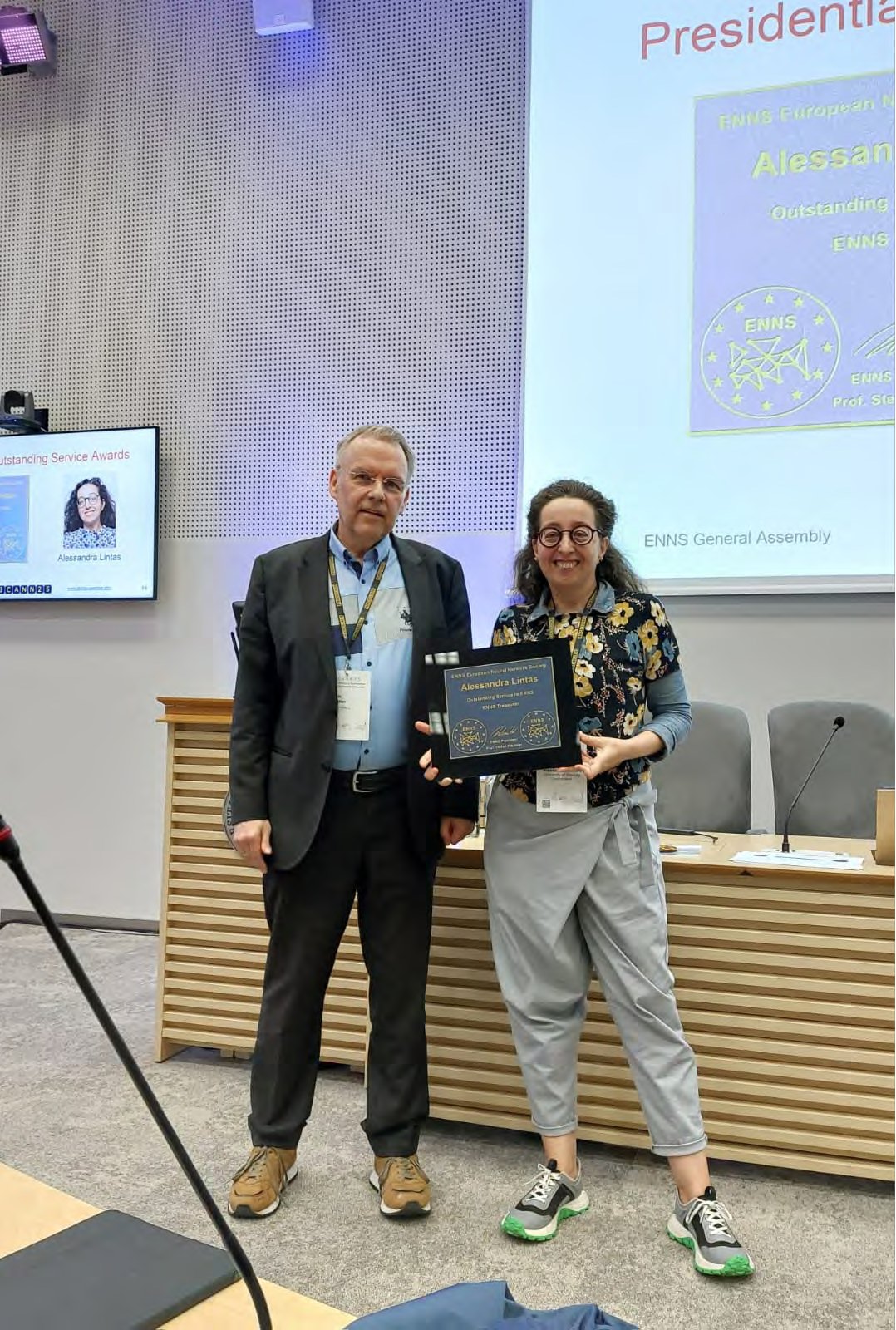
Recognition of Dr. Lintas’s contribution and service to the European Neural Network Society.
University of Lausanne announcement ↗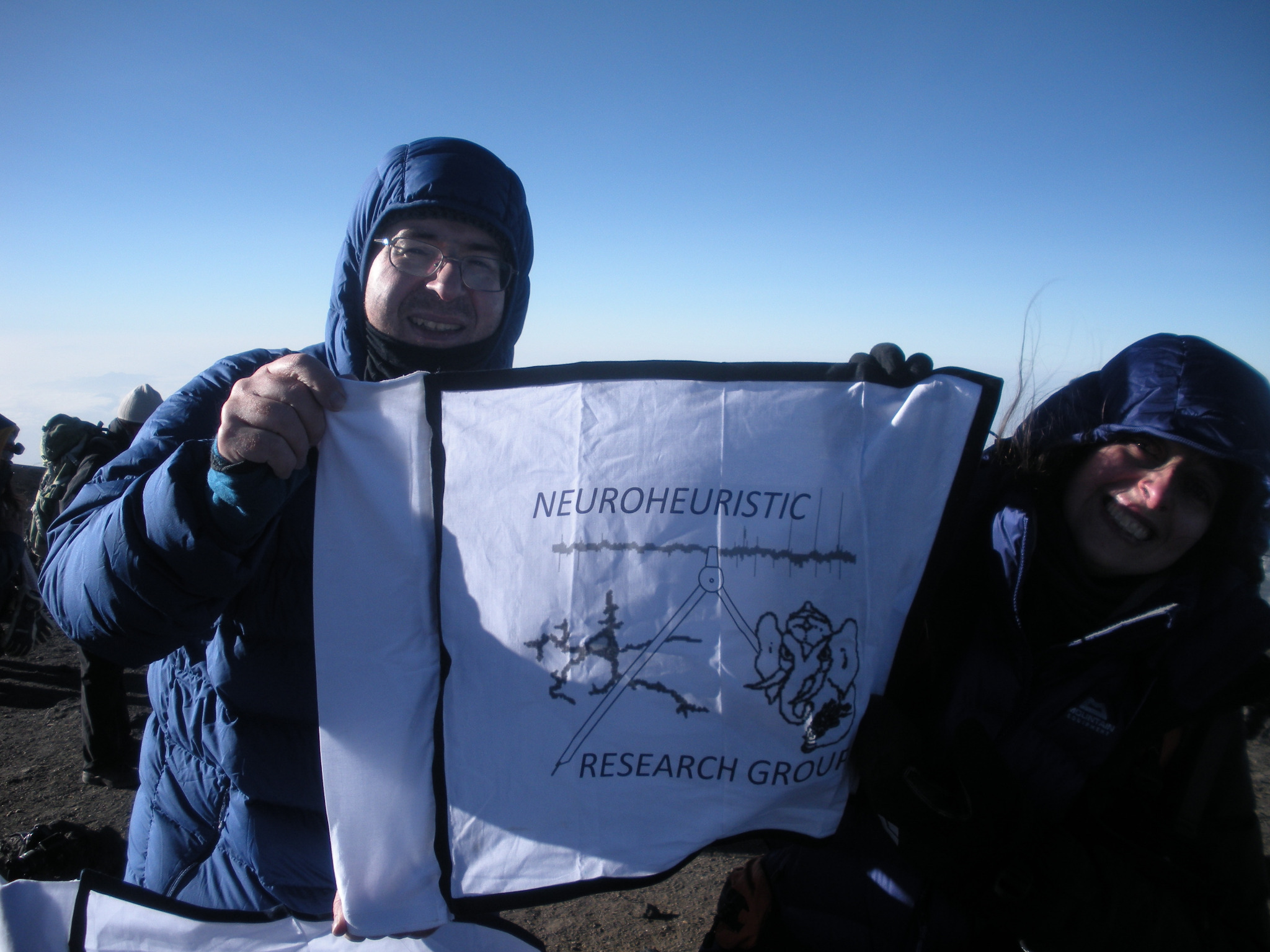
The group’s flag reached the summit of Mount Kilimanjaro — a distinctive milestone in NHRG’s history.
The NeuroHeuristic Research Group welcomes scientific exchange across computational neuroscience, cognition and clinical research.
NHRG website ↗